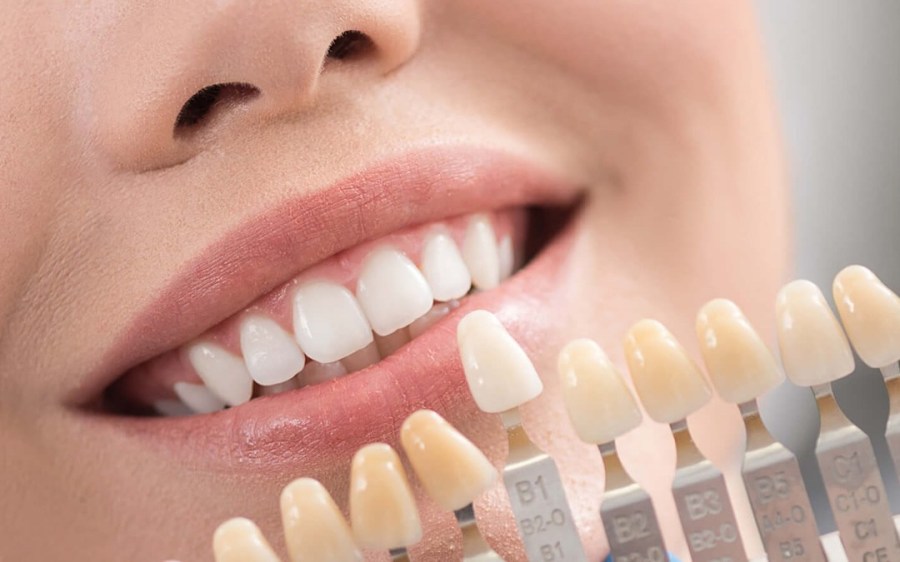
Bonded Veneers: A Perfect Solution for Your Dream Smile

Are you dreaming of a flawless smile that lights up the room? Bonded veneers could be the answer you’ve been looking for. In this post, we’ll delve into the realm of bonded veneers, learning about what they are, the benefits they provide, the method required, and why they’re becoming more popular. Goodbye to dental flaws, and welcome to a confident smile!

Introduction: The Power of a Confident Smile

Your smile is a powerful tool that can convey warmth, confidence, and approachability. It’s no wonder that people invest time and effort into achieving the perfect smile. If you find yourself hesitant to smile due to dental imperfections, bonded veneers could be the solution you’ve been looking for.

Understanding Bonded Veneers

What Are Bonded Veneers?

Bonded veneers, also known as composite veneers, are thin layers of tooth-colored resin that are custom-made to fit over the front surface of your teeth. They are a versatile cosmetic dentistry option used to enhance the appearance of teeth affected by discoloration, chips, gaps, or minor misalignments.

Aesthetic Transformation

These veneers offer a remarkable aesthetic transformation without the need for extensive tooth reduction. Unlike traditional porcelain veneers, which require the removal of a significant portion of the tooth enamel, bonded veneers are minimally invasive and usually do not require enamel removal.

The Benefits of Choosing Bonded Veneers

Natural Appearance

One of the greatest benefits of composite bonded veneers is their ability to replicate the appearance of natural teeth. The used resin material closely resembles the color and texture of natural tooth enamel, producing a seamless and natural appearance.

Versatile Solution

Bonded veneers can address a variety of cosmetic concerns, from discolored teeth to minor chips and gaps. They offer a versatile solution that can address multiple issues in one treatment.

Minimally Invasive Procedure

The process of getting bonded veneers is less invasive compared to other cosmetic dental procedures. The minimal or no enamel removal results in less discomfort and preserves the natural structure of your teeth.

The Bonded Veneers Procedure

Consultation and Assessment

Consultations with an expert cosmetic dentist are the first step on your path to a beautiful smile. During this appointment, you’ll discuss your goals and expectations, allowing the dentist to determine if bonded veneers are the right choice for you.

Preparation and Impressions

Once you’ve decided to proceed, the dentist will prepare your teeth by gently roughening the surface. Impressions of your teeth will be taken to create custom veneers that fit perfectly.

Bonding Process

In order to adhere a veneer to your tooth, a specific adhesive must first be applied on the veneer. To guarantee a natural appearance and comfortable fit, the dentist will shape and polish the veneer.

Caring for Your Bonded Veneers

Oral Hygiene Practices

The durability of your bonded veneers depends on your ability to maintain appropriate dental hygiene. For added protection against scratching the veneer surface, use a non-abrasive toothpaste and brush and floss frequently.

Regular Dental Check-ups

Scheduled dental check-ups allow your dentist to monitor the condition of your bonded veneers and address any potential issues early on.

The Rising Popularity of Bonded Veneers

Celebrity Influences

Celebrities often set beauty standards, and many have openly embraced cosmetic dentistry, including bonded veneers. This trend has contributed to the popularity of veneer treatments.

Social Media and Self-Confidence

In the age of social media, appearance plays a significant role in self-confidence. Bonded veneers offer a quick and effective way to enhance one’s smile, leading to improved self-esteem.

Is Bonded Veneers Right for You?

Candidacy Considerations

Not everyone is an ideal candidate for bonded veneers. Individuals with severe dental issues or those seeking major orthodontic changes may need to explore alternative treatments.

Discussing Options with a Dentist

It’s crucial to have a thorough discussion with your dentist to determine if bonded veneers align with your goals and dental health.

The Confidence-Boosting Effect

Psychological Impact of a Beautiful Smile

A beautiful smile can do wonders for your self-esteem. Feeling confident about your teeth can have a positive psychological impact on various aspects of your life.

Enhancing More Than Your Appearance

Improved Self-Esteem

The boost in self-esteem that comes with a dazzling smile can translate into increased social interactions and a more positive outlook on life.

Better Oral Health Habits

Investing in your smile often leads to better oral hygiene habits, as individuals become more motivated to care for their teeth and maintain their veneers.

Conclusion: Your Journey to a Radiant Smile

In a world where first impressions matter, bonded veneers offer an opportunity to showcase your best smile. With their natural appearance, versatility, and minimally invasive procedure, they’ve become a sought-after choice for those seeking to enhance their dental aesthetics. Say goodbye to dental insecurities and hello to a newfound confidence that radiates from your dazzling smile.


What sport is the most complete and healthy

What sport is the most complete and healthy?

There are numerous sports that help us keep our body in shape. Running, walking, swimming, cycling, yoga… All of them provide numerous and different benefits to our physical and mental health, but which is the most complete?

When we practice sports, we aim to improve our physical health, acquire more muscles, flexibility, strength, or lose fat. Many sports can achieve this if we focus on it, but perhaps we do not choose the one that provides us with the most benefits. For example, running is one of the most practiced sports, it improves our cardiovascular capacity and strengthens the muscles of the legs, especially, but it is an activity with great impact, especially for the knees. On the other hand, running is not always a suitable practice for everyone.

If we stop to think, there is an exercise that can be practiced at any age, and that is always recommended for its benefits. You’re right! It’s about swimming. It is, without a doubt, the sport for everyone. Since the babies, who must learn to swim from a very young age to those older people who want to energize and exercise their bodies with low risk of injury, swimming is the most complete and healthy sport for them. If you still don’t know all the benefits of swimming, keep reading!

Read: 10 MOST PRACTICED SPORTS IN THE WORLD

Swimming: the most complete sport for everyone

Swimming is one of the first sports activities that we learn to practice, and with good reason. Swimming helps develop a correct development of the muscles, strengthening them without impact, since we are floating in the water while giving them dynamism and enhancing their flexibility. Swimming, as long as it is done with the appropriate technique, helps us develop the body symmetrically since all the muscles are used in this sport. For this reason, having a coach who teaches us to swim with the right technique and to breathe correctly is highly recommended to get the most out of this sport.

Another of the great benefits of swimming is that it is a non-impact sport. This means that it is suitable for anyone, regardless of their physical shape. An older person, who has more affected knees, ankles, or hips, will be able to strengthen the whole body without causing them to suffer. You can improve your muscles and work their flexibility without risk. In the same way, an overweight person will be able to mobilize the whole body in a single sport, significantly improving their caloric expenditure and training each muscle group.

Swimming is one of the fullest activities because it helps burn calories, strengthens muscles, increases our endurance, and enhances our cardiorespiratory ability.

This sport has all the benefits of running at a cardiorespiratory level and other activities such as dance or aerobics, without suffering their own impact. It improves our flexibility in the same way as yoga or Pilates and enhances our muscles as when we practice toning exercises, either with weights or with the weight of our own body.In addition, swimming, given its rhythm and the whole body’s involvement, improves coordination and memory, directly involving the brain in the whole process. Concentration on the technique and the variation of breathing (you have to put your head on both sides alternately or cease to be a sport that develops us symmetrically) can have very positive benefits the smallest and the smallest.

Mental Illness and Social Isolation

Mental Illness and Social Isolation

During and after a mental illness period, it is very common to become isolated from friends, family, and even partner, if you have one. It is a separation and isolation process that often occurs because we do not want to harm our loved ones or want to burden them with our problems and difficulties. Also, at other times, the lack of desire to relate to each other and lack of passion in many other vital areas (in cases of depression, especially) and the tendency to abandon oneself. The lack of understanding towards the illness of oneself and others towards us, ignorance, prejudices, and stigma are aggravating this very harsh and threatening situation for many.

People are relational agents by design that need to connect with others to support their essential growth and well-being as intimate interactions cease to happen, whether steadily and suddenly, the individual becomes much bad or sick. When the mental disorder is exacerbated and the loss of help from others when they are alone (voluntarily or voluntarily), the pain can escalate exponentially.

This exclusion from society can end up being practically total, leaving the sick person alone and helpless or feeling this way (and therefore behaving according to it) even when being with loved ones and health professionals.

At the end of this spiral of loneliness and abandonment, relationships with other people are scarce or almost nil, being the merely basic ones to survive, but not enough to live fully or recover from said illness.

People who go through this painful and complex process of isolation or social exclusion, for the most part, do not want to be or feel alone, although at first, they may have felt comfortable or safe in that undoubtedly toxic solitude.

How do you fall into isolation?

It starts by steadily dividing individuals, loved ones, relatives, mates, spouses, etc. Then reasons are created for not attending social activities, including those in which our nearest community is active or not leaving home. People who are at an advanced point of the isolation period sometimes tend not to get out of bed because they do not want or like the need to confront life or disease. After all, it is too late to go back or don’t know how to do it. This creates misery, whether one is motivated and unwilling or thinks like little can be accomplished to guarantee that one ends up alone. It has already been said, humans are social creatures, and, whether they are either ill, they get worse without contact with the social world, or they get worse.

How to get out of isolation?

Being willing to face and change our behavior towards our environment, being ready to get out of the false comfort and security that loneliness can give, not letting isolation take over our lives, not abandoning ourselves or leaving aside our love, caring, or reference people.

The change is or begins with ourselves, and we must stop isolation before it grows older and can have serious consequences on our health.

A change of attitude is necessary: ​​opening up to others, communicating without fear how we feel, how we are, how we want to be treated, etc., …

You can start by admitting and explaining the problem that you are going through naturally and de-dramatizing it, requesting help to overcome it is quite important, speaking from the feeling and emotion that are happening in us at the time of interaction makes us more humans and closer to others, inviting understanding and empathy to appear (not pity).

 Sometimes, social skills training is necessary to recover the relationship and interaction tools that we have lost, always through professionals in the environment. Once these skills have been rehearsed and relearned, it will be easier for us to relate to our environment properly.

 With perseverance and perseverance, and even gradually, we will expose ourselves to social situations of all kinds that make us enjoy and feel good and comfortable, including also from time to time, more formal social situations to interact at different levels or in different areas of personal development (friends, partner, work, …).

You can reconnect with old friends (although it may seem difficult, it is not impossible) or you can find new friends or acquaintances with whom to relate through shared leisure activities, group sports, hobbies or hobbies to carry out with others people and so, a good amount of options. Options and opportunities must be sought and used every time they arise since they do not appear alone. As I have already said, change begins in us and from us.

It is not about making a large number of friends or contacts, or desperately begging for friendship, but about knowing how to select quality relationships and knowing how to maintain them in a propitious way.

For mental illness, you can get Kentucky case management services.