Developed a mobile application on the Apple and Android platform.
For businesses and brands, mobile applications have become an essential means of creating new mobile users’ services. Mobile applications and sites make it possible to consult content or provide an adapted and optimized service on mobile terminals such as smartphones and tablets.
These two mobile terminals have different characteristics. A highly nomadic use characterizes smartphones while tablets have a hybrid use, at the crossroads of nomadism and sedentarism.
Mobiles and tablets have become part of everyday life and are a means of reaching consumers effectively.
Mobile ecosystem
The ecosystem of mobile applications is essentially made up of Apple’s two players (with iOs) and Google (with Android). There are still other relatively important players such as RIM or Windows with their respective Blackberry and Windows Phone OS. Today, these latter platforms are marginal on the market. Companies wishing to develop an application on these platforms are already convinced of these ads ‘ relevance for their market segments.
Special features of a mobile application
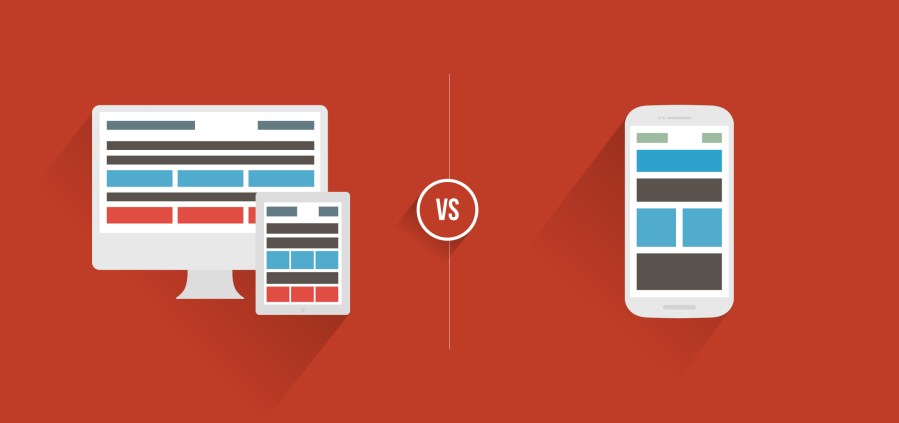
To meet the needs and expectations of the mobile user, an application must be designed for mobility. Even if the service already exists, for example, as a web application, the mobile application must not be presented as a desktop application (or be a copy) first of all because the size of the terminal is different and also because the mobile offers other possibilities than the web.
Mobile applications perform better than mobile websites
A mobile application is developed to achieve a level of quality, in terms of ergonomics and performance, unmatched compared to other means of accessing a service on the mobile. A mobile application can be independent or linked to a web design company service and may or may not use the web.
Environment: no internet
A mobile application, therefore, does not necessarily need the Internet to function on the telephone. Suppose the user finds himself in a private area of the Internet. In that case, he can continue to use his application (even if the information displayed is not the last online if the application retrieves information.)
The advantages of a mobile application
Adapted ergonomics
Designers have to face new constraints, very different from the classic application HMI. The importance of good ergonomics for a mobile application should not be underestimated. Mobile users have become very demanding and expect adapted ergonomics.
Ergonomics has a major role, and if it is specifically developed for the mobile terminal, the user experience will then be better. The ergonomics are mobile user-oriented when it considers the screen’s size, the different positions – horizontal or vertical – of the terminal, and respect for simplicity and intuitiveness. Therefore, the user experience is perfect for mobility, and the mobile application will be preferred over other media.
Material advantages
Mobile applications have the advantage of taking advantage of the characteristics of the phone and the tablet. The terminals have a microphone, a camera, an accelerometer, a gyroscope, and a GPS, which allow new practices compared to a web application.
A marketplace for applications
Applications are listed on online application stores or more simply “stores, ” allowing them to have better visibility than a website. A simple way to access an application meets a particular need.
Push notification, a questionable advantage
Push notification is a powerful marketing lever and allows users to be alerted. Push messages appear in your notification bar, unmissable. Be careful; however, the push notification is an exercise in which you have to be skilled because Apple accepts push notifications if only there is an interest for the mobile user to be notified. Purely advertising messages are therefore not possible, for example.
 The Response Blog